Horse & Buggy Safety
Horse and Buggy Safety
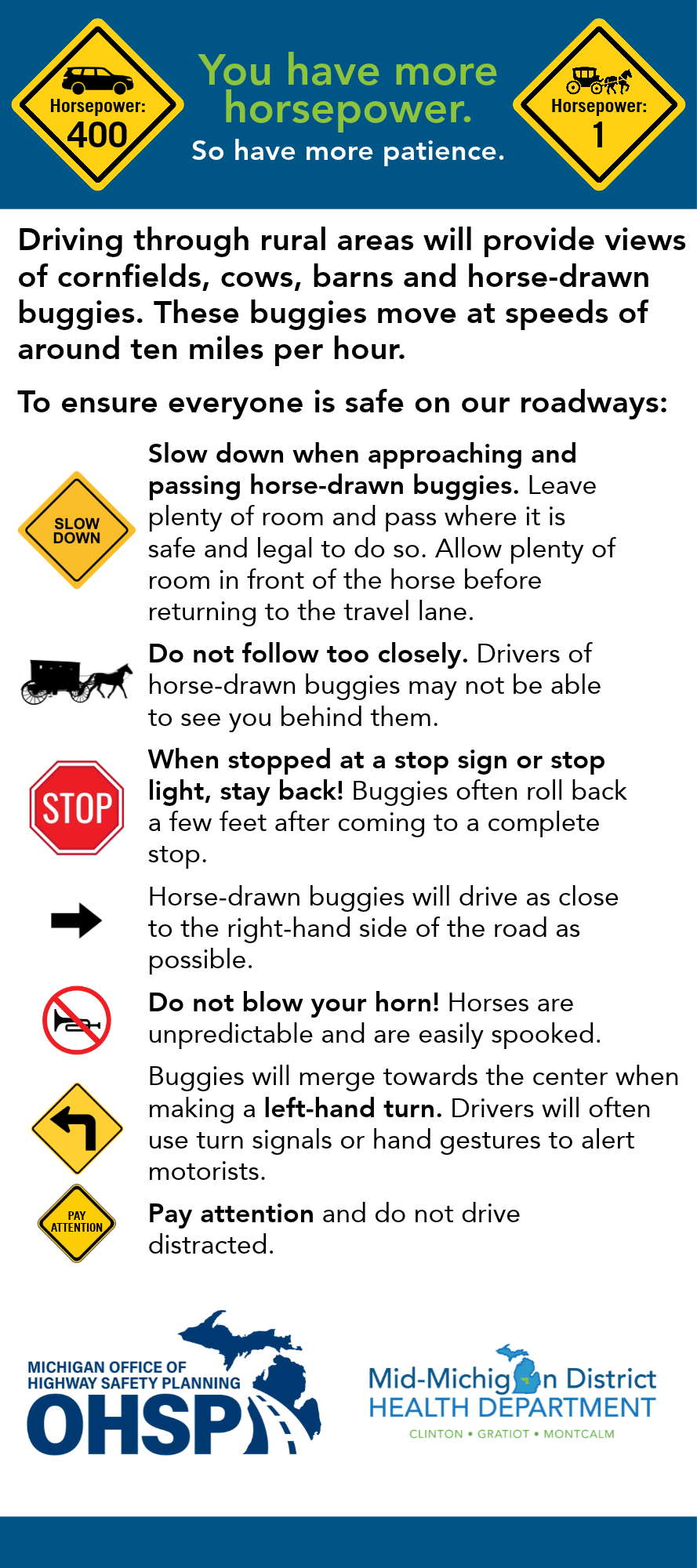
Driving through rural areas provides views of cornfields, cows, barns, and horse-drawn buggies. These buggies move at speeds of around 10 miles per hour. Blind hills and curves may increase the risk of crashes, especially due to the low visibility of black buggies and dark horses. Horse and buggy accidents can lead to psychological trauma, injuries, and fatalities for both people and horses.
What motorists should know
The difference in speed between a horse and buggy and a motor vehicle means that motorists have a short time in which to take action to avoid a crash. Most crashes between a motor vehicle and a horse and buggy are rear-end or clipping crashes. You may think that most crashes occur in low light conditions, but in our area, the majority happen in daylight hours. Remember, you have more horsepower, so have more patience and share the road.
Here are some tips to ensure everyone is safe on our roadways:
- Slow down when approaching and passing horse-drawn buggies. Leave plenty of room and pass where it is safe and legal to do so. Allow plenty of room in front of the horse before returning to the travel lane.
- Do not follow too closely. Drivers of horse-drawn buggies may not be able to see you behind them.

- When stopped at a stop sign or stop light, stay back! Buggies often roll back a few feet after coming to a complete stop.
- Do not blow your horn! Horses are unpredictable and are easily spooked.
- Horse-drawn buggies will drive as close to the right-hand side of the road as possible.
- Buggies will merge towards the center when making a left-hand turn. Drivers will often use turn signals or hand gestures to alert motorists.
- Pay attention and do not drive distracted.
Resources